

Talking Tom Gold Run
Outfit7 Limited
I spent time with Talking Tom Gold Run as a quick-play action game, and my main impression is simple: it is at its best when I want an immediately understandable challenge that turns a spare minute into a small chase for a better run. The controls are easy to pick up, the familiar character gives the game instant personality, and collecting gold makes even a short attempt feel purposeful. It is not trying to replace a deep console adventure, though. Its appeal comes from repetition, quick reactions, and the satisfying habit of improving one run at a time.
That makes it a particularly approachable choice for younger players and casual mobile gamers, while experienced endless-run fans may find the basic loop less surprising after extended sessions. I would recommend it to someone who enjoys short bursts of action and light progression, but I would not present it as a game for players looking for a large story, complex strategy, or a finish line.
Why the running loop works so well
The central idea is wonderfully direct. Tom runs forward automatically, while I guide him through the route, avoid hazards, collect gold, and try to keep the attempt alive. That clarity matters on a phone: I do not need to remember a complicated control scheme before the action begins. A swipe or tap has an immediate purpose, and the result is easy to understand when I mistime a move.
Related News

Free Fire: Winterlands vs. Rivals – A Unique Battle Royale Showdown

Why Talking Tom: Hero Dash Run Is Your Next Gaming Obsession
The best part is the way the game creates a rhythm between attention and reward. I watch the path, make a quick decision, gather a line of coins, and then prepare for the next obstacle. The gold is not just decoration; it gives each run a reason to continue and makes a near-miss feel like something I can correct on the next attempt. The game turns tiny improvements into a reason to come back, which is exactly what a good endless runner should do.
I also like how naturally it fits around everyday interruptions. If I have a short wait before an appointment or a few minutes during a commute, I can start a run without committing to a long session. A failed attempt does not feel like losing a large amount of progress, so restarting is painless. That low commitment is one of the strongest reasons this game has remained accessible to such a broad audience.
Related News

Why WhatsApp Messenger Still Makes Everyday Communication Feel Easy

Jurassic World: The Game Is the Better Dino Tycoon for Strategic Players

Threads in Real Life: Who Should Join, Lurk, or Leave

How SHEIN Turned Shopping Into an Endless Content Feed

How to Make Fortnite Feel Smarter on Mobile

Should You Switch to Microsoft Outlook on Mobile?
Its presentation supports that accessibility. The colorful world, animated character, and clear visual separation between the runner and the route make the action readable without demanding a serious learning period. The tone stays playful rather than intense, which suits its Everyone content rating and helps explain why it works as a family-friendly action game. Parents looking for something more active than a simple puzzle can introduce it easily, although younger children may still need guidance around optional purchases.
Small decisions make each attempt matter
Although the basic controls are simple, good runs require more than moving randomly from side to side. I have to look ahead rather than react only to what is directly in front of Tom. When several possible paths appear, the most attractive line is not always the safest one. A trail of gold can tempt me into a risky move, while a less rewarding route may keep the run alive long enough to collect more later.
That creates a useful trade-off between immediate reward and survival. Beginners can focus on staying on the path and learning the timing of obstacles. Once that becomes comfortable, I can start choosing routes based on the amount of gold, the position of hazards, and the speed of the run. This gradual shift gives the game a little more depth than its cheerful appearance first suggests.
Gallery
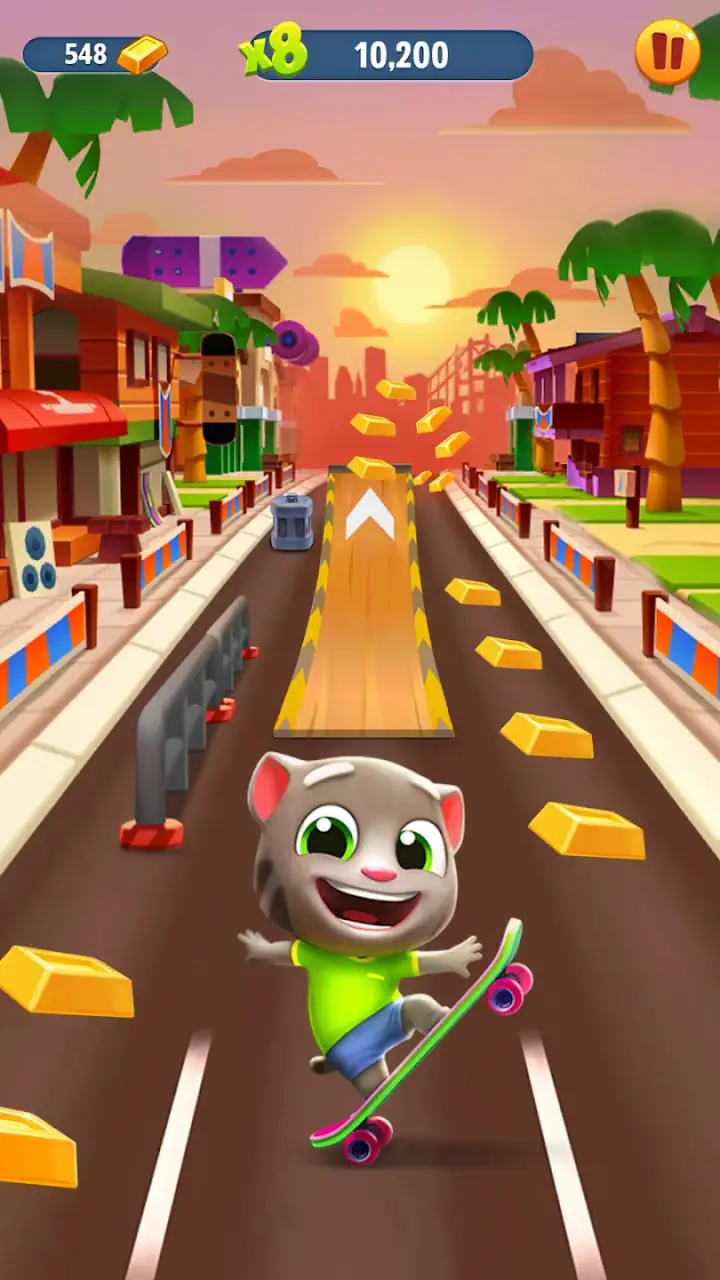
One practical habit helped me more than simply trying to react faster: I started watching the space after an obstacle instead of staring at the obstacle itself. The next move often arrives quickly, and planning the landing or exit makes the following decision easier. It is a small adjustment, but it changes the game from frantic swiping into a more controlled sequence of predictions.
I also found it useful to treat the opening of a run as a warm-up rather than immediately chasing every coin. Learning the rhythm of the route first helps preserve attention for the more demanding moments. When I focused too much on collecting everything, I made careless moves and ended the attempt earlier than necessary. The game rewards enthusiasm, but it rewards restraint too.
Progression gives the coins a purpose
Collecting gold feels more meaningful because it connects the running itself with longer-term progress. Instead of every attempt disappearing when it ends, the currency encourages me to think about what I am building toward. That is important in an endless game, where there is no conventional final level waiting at the end of the road.
The progression is best understood as a reason to repeat the loop, not as a replacement for skill. Improvements can make the experience feel more comfortable, but they do not remove the need to pay attention. I still have to read the route and make the right move. For me, that balance is healthier than a system where upgrades completely overpower careful play.
A useful approach is to decide what kind of session I am having before I start. If I am playing casually, I concentrate on gathering gold and enjoying the animation. If I am trying to improve, I pay attention to why the run ended and repeat the same opening until the movement feels natural. Separating those goals prevents the game from becoming frustrating when a relaxed attempt does not produce a personal best.
The game comes from Outfit7 Limited, the developer associated with the Talking Tom character, and that identity is important to the experience. Tom is not an anonymous runner placed into a generic course. His expressions and recognizable personality make mistakes feel lighter and give the game a more playful tone. Players who already know the character will probably connect with it faster, while newcomers can still understand the action without any background knowledge.
Where it sits among endless runners
Compared with more demanding endless runners, this one puts approachability ahead of technical complexity. I do not need to study a dense upgrade tree or learn an elaborate story before enjoying a session. The route, the character, and the gold are enough to communicate what matters. That makes it a good alternative for someone who finds darker, faster, or more complicated runners exhausting.
The trade-off is that players who want a highly competitive or mechanically rich experience may eventually want more variety. A game built around an endless chase naturally repeats its fundamental actions. The pleasure comes from cleaner execution and continued progression, not from discovering a radically different genre every few minutes. If I want a game that constantly introduces new rules, this would not be my first choice.
It is also less suitable for someone who dislikes score-chasing. There is no traditional conclusion that tells me I have completed the whole experience. The motivation has to come from improving, collecting, unlocking progress, or simply enjoying another run. That structure is satisfying for people who like gradual mastery, but it can feel aimless to anyone who needs a clear campaign ending.
The friction I noticed during longer sessions
The same simplicity that makes the game welcoming can become its main limitation. After several consecutive runs, I sometimes felt that I was repeating familiar decisions rather than learning a completely new skill. The first few attempts can be exciting because every obstacle demands attention; later, the challenge depends more heavily on patience and consistency.
This is not a flaw for short sessions, but it matters if I try to play for a long time. I enjoy it more when I stop after a handful of attempts and return later than when I force myself to continue after the loop has started feeling automatic. In that sense, the game works better as a pocket-sized habit than as an all-evening activity.
There is also the usual tension between a free download and optional spending. The game can be started without paying, which is a major advantage for casual players, but in-app purchases range from $0.99 to $99.99 per item. That broad range means I would be cautious about handing the device to a child without discussing purchase controls first. The safest way to enjoy the game is to treat spending as optional, not as part of the basic requirement for trying it.
Another limitation is that the game’s strongest qualities depend on the player enjoying its specific tone. The bright style and Talking Tom presentation are central rather than incidental. If I prefer a realistic setting, a serious atmosphere, or a minimalist runner with no character-driven personality, the charm may not transfer. That is a matter of taste, but it is worth recognizing before downloading.
On the technical side, the game supports devices running Android 6.0 or later. That makes it available to a wide range of Android users, including people who are not using a brand-new phone. Even so, the quality of a particular session can depend on the device and its condition, so I would avoid judging the game solely by how it feels on an older handset with limited free space or heavy background activity.
Who will get the most from it
I think the best audience is someone who wants immediate action with a friendly presentation. It suits children who can manage simple touch controls, families looking for a recognizable character, and adults who want a low-pressure distraction. It is also a good fit for players who enjoy setting personal goals, such as collecting more gold than in the previous attempt or surviving longer without taking unnecessary risks.
A realistic everyday use case is a short break between tasks. I might open the game while waiting for food, play one attempt, notice that I made a poor route choice, and try once more. That second run has a clear purpose without requiring me to remember a complicated storyline. When the break ends, I can close the game without feeling that I abandoned a major mission.
It can also work as a gentle introduction to reflex-based games. Someone who has never played an endless runner can learn the basic movement through immediate feedback, then gradually start thinking about timing and route selection. I would still encourage a younger player to take breaks, especially because repeated quick movements and the desire to beat a previous run can make a short game session stretch longer than intended.
I would suggest skipping it if your priority is a substantial offline-style adventure with character development, elaborate puzzles, or a definitive ending. I would also point more competitive players toward a runner with deeper systems if they want extensive customization or a stronger emphasis on advanced mastery. This game is not failing by being simple; it is making a deliberate choice. The question is whether that choice matches what you want from a mobile game.
The scale of its audience reflects how easy it is to approach. It has passed over 500 million installs, holds a 4.3 average from around 6.4 million ratings, and has about 51 thousand written reviews. Those figures do not change my personal experience, but they do fit the game’s broad design: recognizable, free to start, suitable for Everyone, and easy to understand within moments.
My final recommendation
After playing it, I see Talking Tom Gold Run as a polished casual action game built around a dependable loop rather than ambitious complexity. Its strongest qualities are clear controls, cheerful presentation, quick sessions, and a collection system that gives repeated runs a reason. The most useful way to approach it is to enjoy the chase in short bursts, learn from each mistake, and avoid treating every coin as worth a reckless move.
I appreciate that the game can be free to play and still offer a complete starting point for someone who simply wants to run, dodge, and collect. At the same time, the optional purchase range deserves attention, and the repeated structure may not satisfy players who need constant novelty. Those are meaningful limitations, not reasons to dismiss it entirely.
My recommendation is strongest for families, Talking Tom fans, and casual players who want an inviting runner for spare moments. I would recommend trying it before spending anything, then deciding whether the progression and repeated challenges genuinely hold your attention. For me, the right way to play is in compact sessions focused on improving one decision at a time. Used that way, it remains an enjoyable and accessible mobile game, even if it is not the deepest option in the action category.
FAQs for Talking Tom Gold Run
What is Talking Tom Gold Run about?
Talking Tom Gold Run is an endless runner game where players guide Tom and his friends as they chase down a raccoon thief who has stolen their gold. The game features vibrant graphics, engaging gameplay, and various levels that keep expanding as you progress. Players can build and upgrade homes, unlock characters, and enjoy themed events.
Is Talking Tom Gold Run free to play?
Yes, Talking Tom Gold Run is free to download and play. However, it does offer in-app purchases for items like in-game currency, which can enhance your gameplay experience. These purchases are optional and not necessary to complete the game, but they can help players progress faster.
What devices can I play Talking Tom Gold Run on?
Talking Tom Gold Run is available on both Android and iOS platforms. It requires Android version 4.4 and up, or iOS 9.0 or later. The game is compatible with most modern smartphones and tablets, ensuring a wide range of users can enjoy the experience.
Does Talking Tom Gold Run require an internet connection?
While Talking Tom Gold Run can be played offline, some features such as daily challenges, leaderboards, and event participation require an internet connection. Playing online also allows you to save your progress and connect with friends to compare scores and achievements.
How can I ensure a safe experience for my child while playing Talking Tom Gold Run?
To ensure a safe experience, it's recommended to use parental controls to manage in-app purchases and screen time. The game contains ads, so consider supervising younger children while they play. The app is designed for all ages, but guidance helps maintain a safe and enjoyable environment.
Pros
- Engaging endless runner gameplay.
- Vibrant and colorful graphics.
- Frequent updates with new content.
- Easy controls suitable for all ages.
- Fun character customization options.
Cons
- In-app purchases can be pricey.
- Requires constant internet connection.
- Ads can be intrusive at times.
- Limited storyline depth.
- Some levels feel repetitive.


